
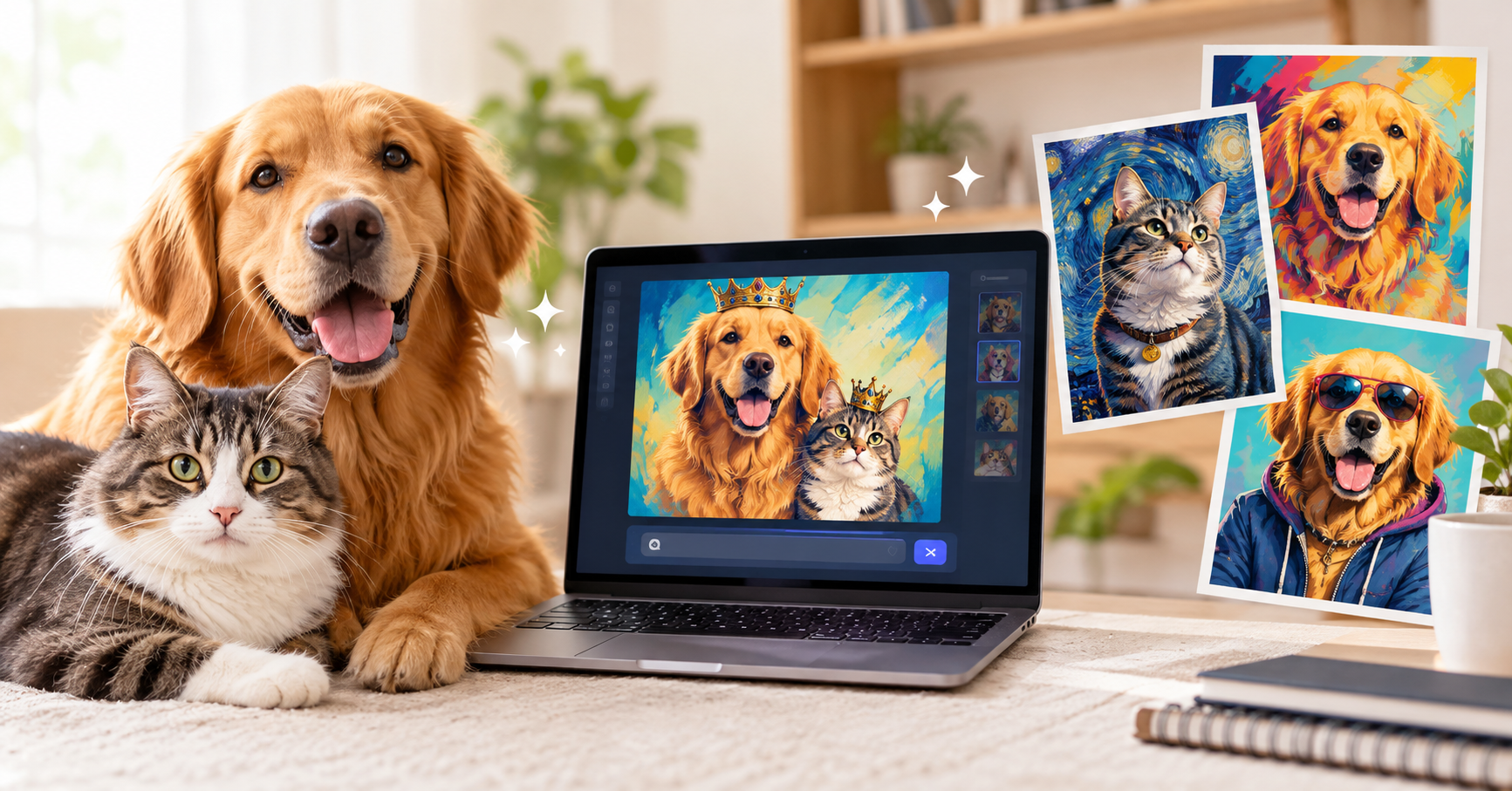

Your pet has a personality no stock photo can capture: the dramatic sigh, the one crooked ear, the stare that says dinner is late. AI image generators can turn those quirks into paintings, illustrations, and stylized portraits worth framing. The quality of the result depends mostly on the prompt you write.
This guide covers how to build effective pet portrait prompts, gives you ready-to-use examples for several art styles, and shows how to fix common problems.
Why Prompts Matter for Pet Portraits
AI image tools don’t understand your pet the way you do. They work from the words and reference images you give them. A vague prompt like “cute dog painting” produces a generic dog that looks like nobody’s actual pet. A specific prompt with details about breed, coloring, pose, lighting, and style gives the tool enough direction to produce something distinctive.
If your tool lets you upload a reference photo, use it. A clear photo combined with a good prompt is the most reliable way to get a portrait that looks like your animal.
The Five-Part Prompt Formula
Most strong pet portrait prompts contain the same five building blocks:
- Subject: the animal, its breed, and identifying features
- Pose or expression: what the pet is doing or feeling
- Art style or medium: oil painting, watercolor, pencil sketch, and so on
- Lighting and mood: soft window light, golden hour, moody studio glow
- Background and composition: plain backdrop, garden, close-up, full body
Here is the formula in action:
A fluffy orange tabby cat with white paws and green eyes, sitting upright with a calm, regal expression, painted in rich oil on canvas, warm golden-hour lighting, deep burgundy velvet background, close-up portrait.
Every phrase in that prompt gives the generator something concrete to work with.
Prompts by Art Style
Below are starting points for popular styles. Replace the bracketed details with your own pet’s traits.
Classic Oil Painting
Oil portraits give pets a timeless, gallery-worthy look.
Traditional oil portrait of a [breed] dog with [coat color and markings], seated on a wooden chair, dignified expression, soft directional light, visible brushstrokes, dark textured background, museum-quality realism.
Watercolor
Watercolor suits gentle, airy results and works well for pets with light or multicolored coats.
Loose watercolor painting of a [color] [breed] cat curled up on a windowsill, soft washes of blue and peach, paint bleeding at the edges, white paper texture, delicate and dreamy.
Pencil or Charcoal Sketch
Monochrome sketches make a strong impression as memorial or keepsake portraits.
Detailed graphite pencil drawing of a senior [breed] dog, gentle eyes, fine fur texture, soft shading, cream paper background, hand-drawn realism.
Cartoon and Storybook Illustration
Illustrated styles are popular for children’s rooms, gifts, and social media avatars.
Whimsical storybook illustration of a small [color] terrier wearing a tiny explorer’s hat, standing in a sunlit forest, bright pastel colors, soft outlines, cheerful and friendly.
Pop Art
Bold colors and high contrast make pop art a fun choice for energetic pets.
Pop art portrait of a [breed] dog with a big open-mouth grin, bold black outlines, flat neon colors in a four-panel grid, halftone dot pattern.
Fantasy and Costume Portraits
Dressing your pet up is one of the most entertaining uses of AI art.
Majestic [breed] dog as a medieval knight in polished silver armor, dramatic stormy sky behind, cinematic lighting, highly detailed digital painting.
Elegant Siamese cat as a Renaissance noblewoman in a velvet gown with a pearl necklace, formal portrait composition, warm candlelight.
Minimalist Line Art
Clean line art works well for tattoos, logos, and modern home decor.
Minimalist single-line drawing of a sleeping cat, black ink on white background, continuous flowing line, simple and elegant.
Details That Make the Portrait Look Like Your Pet
Style words set the mood, but physical details create the likeness. Consider including:
- Coat pattern: brindle, tuxedo, calico, merle, or a white chest patch
- Eye color and shape: amber, heterochromia, or round and wide
- Ear position: floppy, one ear up, or folded
- Distinguishing marks: a scar, a freckled nose, a missing tooth
- Age cues: a graying muzzle, puppy proportions, or kitten roundness
One or two specific traits often matter more than a long list of general ones.
Common Problems and How to Fix Them
The breed looks wrong. Name the breed explicitly and describe its defining features, such as “short-muzzled” or “long silky coat.”
Extra limbs or distorted paws. Paws are a known weak spot for image generators. Try a close-up head-and-shoulders composition, or add “natural anatomy, correct paws” to your prompt.
Colors don’t match. Be precise. “Chocolate brown with a cream chest” works better than “brown.”
The style looks messy. Choose one medium and stay consistent. Mixing “watercolor, oil painting, and pixel art” confuses the model.
Everything looks too glossy. Add texture words like “matte finish,” “canvas grain,” or “paper texture” to pull the result away from the plastic look.
Tips for Better Results
Generate several versions and compare them. Small wording changes can shift the result noticeably, so adjust one element at a time to learn what each phrase does. Keep a note of prompts that work; a good one can be reused for other pets or family members with only the details swapped out.
When you upload a reference photo, choose one with even lighting and a clear view of the face. Blurry or heavily shadowed photos produce unreliable likenesses.
Using Your AI Pet Art
Once you have a portrait you love, there are plenty of ways to enjoy it: framed prints, phone wallpapers, holiday cards, mugs, or a gift for a fellow pet lover. Before printing at a large size, check that your image resolution is high enough, and consider using an upscaling tool if it isn’t.
It’s also worth reading the terms of your chosen AI tool. Policies on commercial use vary, so confirm what you’re allowed to do before selling merchandise featuring your generated art.
Final Thoughts
A great AI pet portrait starts with observation. Notice what makes your dog or cat unmistakable, put those details into a clear prompt, and choose a style that suits their personality. Whether you want a stately oil painting or a cartoon adventure, a thoughtful prompt is the difference between a generic animal and one that looks like family.
Try one of the prompts above with your pet’s details, then experiment from there.

Leave a Reply