
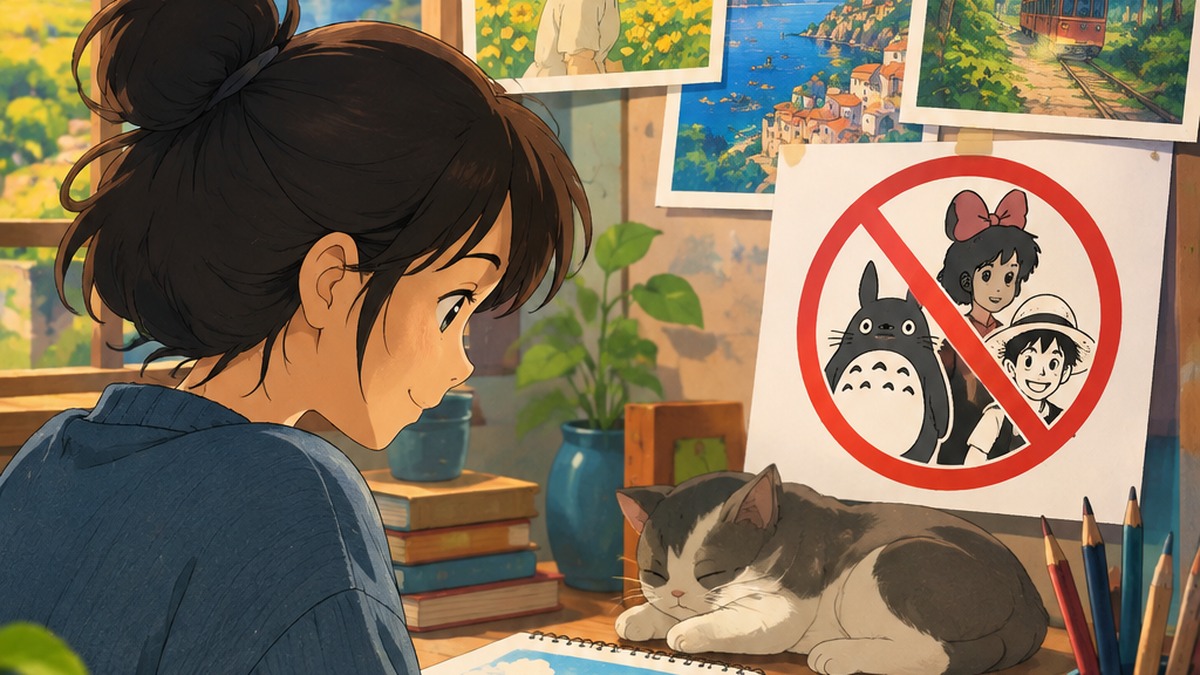

Studio Ghibli-style prompts have become one of the most in-demand types of artistic expression for AI-powered tools to recreate. However, despite the general impression evoked by these works, their use in image generation often presents copyright-related challenges. This article will explore the differences between the concepts protected by copyright and those that are not. This information is critical for creators who seek to use AI-powered tools for commercial or professional purposes without experiencing legal issues.
Style Versus Substance
Any kind of artistic style in and of itself is not protected by copyright. Copyright law only protects specific creative expressions of fixed ideas, such as an author’s character portrayal, exact plot or subplots, specific names and scenes, and other original and distinguishable features. On the other hand, a descriptive manner, a painterly, hand-drawn appearance with pastels and greenery, and similar conventions are not. Therefore, using the phrase “in a soft colorful painterly anime style” can be perfectly fine in terms of copyright.
However, an attempt to prompt specific character names, Totoro and No-Face, or depict recognizable scenes of the films may present some problems. In fact, Ghibli Studio works are subject to copyright, just like any other artistic works. While the creation of a new artistic piece based on existing one is encouraged, one should make sure that their creation does not copy protected expressions of the original. Therefore, to describe the desired artistic style without copying specific characters, names, or scenes, one can opt for focusing on the impression given by an artwork. If it is the gentle and colorful world created in hand-drawn or painted animation one should convey this feeling into the description using the relevant vocabulary.
Prompts Creation Ideas
First, one can create a list of descriptive prompts related to the aesthetic of Studio Ghibli works. As mentioned above, any particular characters or scenes should be avoided, with a focus on lighting, colors, materials, and composition. Specifically, one can describe lighting conditions (sunshine, moonlight, golden hours, etc.), color palettes (vibrant or muted colors, pastels, etc.), and the general composition of the depicted objects and their placement. The subject of Studio Ghibli art prompts can range between landscapes, animals, and people, so their depiction can be also added to these prompts.
For example, a combination of a gentle lighting, soft color schemes of yellows and greens, the wide-angle landscape with small buildings or structures in it, and the painterly brush stroke textures will help to create a prompt asking to draw an image in a style reminiscent of Studio Ghibli. This way, one can convey the intended meaning without the possibility of infringing copyright.
In addition, prompts involving the creation of artistic characters similar to the ones depicted in Ghibli movies are also welcome. It is always better to avoid the description of the specific characters, rather provide a set of their general characteristics: height and body type, features of their clothing or any other accessories that can represent a typical set of this type of character. Alternatively, one can choose to design completely new creatures, objects, and characters, using the artistic style as a freehand basis. Providing detail is essential to get a good image but with more unique components to avoid potential issues.
Tips
A simple idea behind the design of the effective prompt word is that it should provide an explicit instruction of the image the user asks for but without explicitly giving the names or visual concepts. A common practice that should be avoided when creating an AI art prompt is using IP names or other identifying features, as this can make an artwork derivative of an existing one. There is a number of creative tips that should be offered to the prompt user, which concern the description of the target mood and image content. For example, if an artwork is supposed to represent a certain subject then the descriptive means should be used to provide a vivid and understandable portrayal.
Similarly, a list of adjectives describing a light, color schemes, the materials of an object, or its location can be provided. Additionally, another way of building creative prompts with descriptive purposes is a selection of relevant and specific terms referring to art objects, people, or the subject and setting of the image.
In any case, the prompt should contain four elements: a subject, a setting, a mood, and an artistic technique, as previously described in this article. This way, there are clear, vivid instructions of the necessary painting which avoids copying any of the existing images. Moreover, it will add to overall creativity of the user if they will attempt to describe the artistic image themselves using descriptive means rather than just the names.
The above considerations can be beneficial in creating a prompt which refers to the aesthetic qualities of a certain artistic movement without copying its specific concepts or creative expressions. Avoiding IP referencing is important to prevent potential copyright issues with AI-generated artwork, which can also arise in cases of commercial reuse. At the same time, such restrictions can also be encouraging to creativity since the new unique works created with the clear understanding of their uniqueness will present fewer challenges in the court or among the buyers. Finally, for any professional user, this is always of crucial importance to ensure that their product or services offered on their behalf are completely legal with regard to copyright issues.
Leave a Reply