
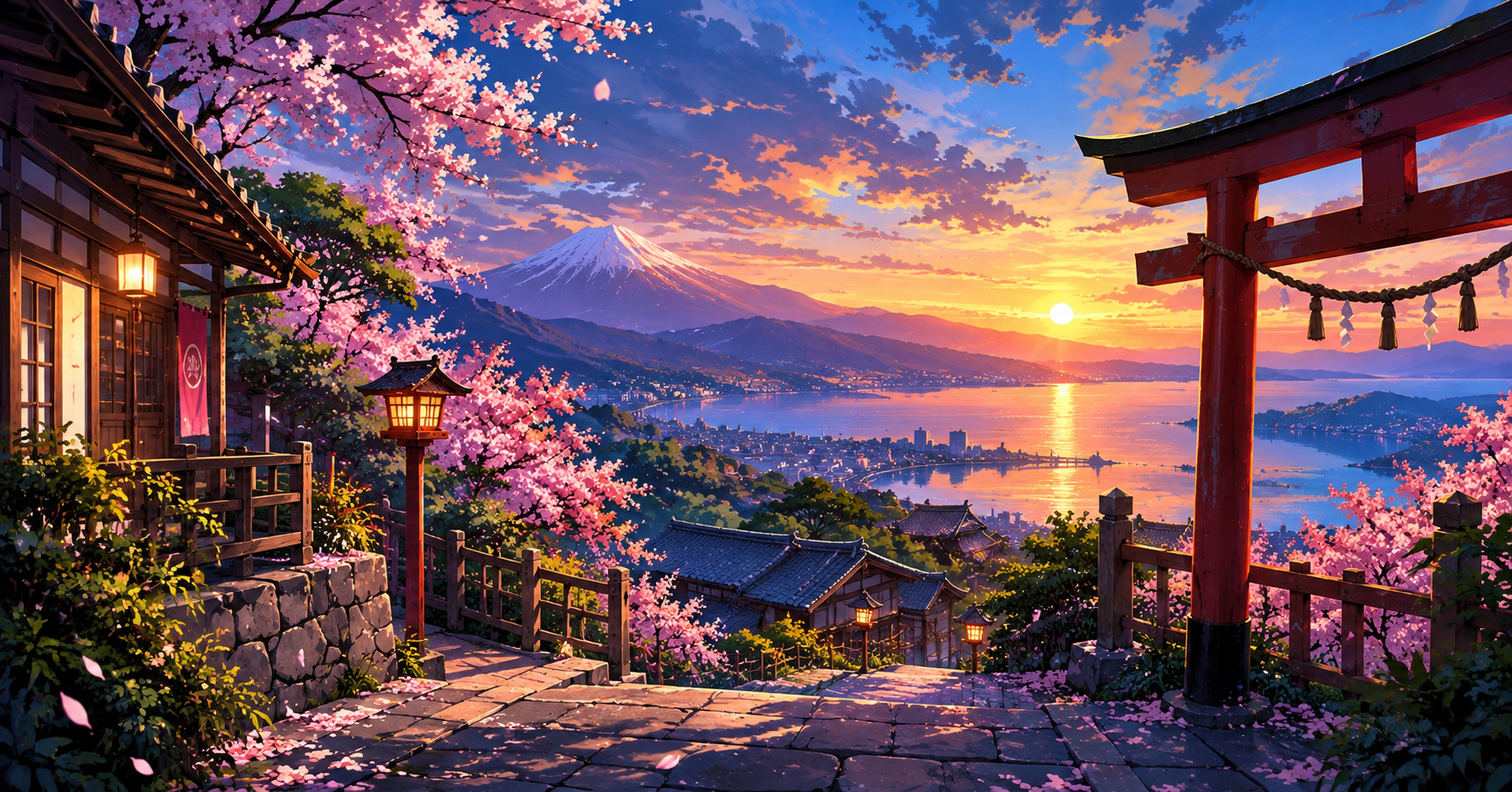

Character-free anime backgrounds have become one of the most requested categories in AI art generation, and for good reason. A beautifully rendered environment can carry just as much emotional weight as a character illustration — sometimes more. Whether you’re building a visual novel, designing wallpapers, creating mood boards, or simply exploring the aesthetic possibilities of anime-style art, mastering environment-only prompts opens up a huge creative space that doesn’t depend on getting a face or pose right.
This guide breaks down how to write effective anime background prompts, the key elements that separate a flat scene from an atmospheric one, and a set of ready-to-use prompt ideas across different settings and moods.
Why Background-Only Prompts Are Worth Mastering
Anime as a medium leans heavily on environmental storytelling. Studios like Kyoto Animation and Makoto Shinkai’s team are famous for lingering shots of empty classrooms, rain-soaked streets, and sun-drenched train platforms that say more about a story’s tone than dialogue ever could. When you remove characters from the equation, the background has to do all the emotional work — which means prompt precision matters even more.
Environment-only prompts are also technically easier to get right. You don’t have to worry about anatomy, hand placement, or facial consistency, which are the most common failure points in AI-generated anime art. This makes backgrounds a great entry point for beginners and a reliable category for anyone building a large, cohesive image library.
Core Elements of a Strong Background Prompt
A good environment prompt typically layers five components:
- Setting type – interior, exterior, urban, rural, fantastical
- Time of day and lighting – golden hour, overcast, night with neon glow
- Weather and atmosphere – rain, fog, cherry blossom petals, snowfall
- Art style reference – Studio Ghibli-esque, Makoto Shinkai-style, retro 90s anime, modern digital painting
- Mood or emotional tone – nostalgic, melancholic, peaceful, eerie
Stacking these elements in a single prompt gives the generator enough context to produce a cohesive scene rather than a generic one. For example, instead of “anime classroom,” a stronger prompt would be: “empty anime classroom, afternoon sunlight streaming through curtains, dust particles floating in the light, Kyoto Animation style, nostalgic and quiet mood.”
Prompt Ideas by Category
Urban and School Life
- Empty anime classroom at sunset, warm orange light, chalk dust in the air, detailed wooden desks
- Quiet train station platform at dusk, glowing lanterns, wet pavement reflecting neon signs
- Rooftop of a Japanese high school, cloudy sky, laundry lines swaying, distant city skyline
- Narrow Tokyo alleyway at night, vending machine glow, steam rising from a ramen stall
- Convenience store interior late at night, fluorescent lighting, rain visible through the window
Nature and Countryside
- Rice paddies under a pastel pink sunset, mountains in the background, soft mist rolling across the fields
- Cherry blossom-lined riverbank, petals drifting on the water, Studio Ghibli-inspired color palette
- Quiet forest shrine path, moss-covered stone steps, sunlight filtering through tall trees
- Coastal cliffside overlooking the ocean, seagulls in the distance, golden hour lighting
- Snow-covered mountain village, smoke rising from chimneys, warm window lights against the blue evening sky
Fantasy and Otherworldly
- Floating islands connected by stone bridges, waterfalls cascading into clouds below
- Abandoned magical library, floating books, dust motes illuminated by shafts of light
- Crystal cave with bioluminescent plants, soft blue and purple glow reflecting off water pools
- Sky city at sunset, airships drifting between towers, warm amber lighting
- Enchanted forest clearing with glowing mushrooms and fireflies at twilight
Cozy and Slice-of-Life Interiors
- Small apartment bedroom, string lights, scattered manga volumes, rain against the window
- Traditional Japanese tea house interior, tatami mats, soft natural light through paper screens
- Cluttered artist’s studio, canvases leaning against walls, warm desk lamp lighting
- Cafe interior with steam rising from a coffee cup, bookshelves lining the walls, soft jazz atmosphere implied through lighting
- Attic bedroom with a large window overlooking a rainy city, fairy lights strung across the ceiling
Dramatic and Atmospheric
- Rain-soaked city street at night, reflections of neon signs in puddles, empty except for a single umbrella left behind
- Abandoned amusement park at dusk, rusted ferris wheel silhouette, overgrown grass
- Fog-covered bridge over a still lake, distant mountains barely visible
- Ruins of an ancient temple reclaimed by nature, sunbeams piercing through a collapsed roof
- Empty subway platform, flickering lights, sense of stillness and isolation
Tips for Getting Better Results
Be specific about lighting. Lighting direction and color temperature do more to establish mood than almost any other variable. “Soft morning light” and “harsh fluorescent lighting” produce completely different emotional readings of the same physical space.
Reference known art styles carefully. Naming a studio or director’s visual style can help guide composition and color grading, but combining too many conflicting references (e.g., a Ghibli-style prompt with cyberpunk neon) can confuse the output. Pick one dominant influence and build around it.
Use sensory details even in a visual medium. Words like “steam,” “dust particles,” “petals drifting,” or “reflections” force the generator to add texture and movement cues that make a static image feel alive.
Iterate on composition. Try varying perspective — a low-angle shot of a train platform feels very different from a wide establishing shot of the same location. Small compositional changes can dramatically shift the emotional impact of a background.
Keep a prompt library. Since environment prompts don’t need to account for character variables, they’re highly reusable. Save your best-performing prompts and build variations by swapping just the lighting or weather element.
Final Thoughts
Anime backgrounds without characters offer a surprisingly rich creative playground. From quiet countryside scenes to sprawling fantasy cities, environment-only prompts let you focus entirely on atmosphere, color, and composition — the elements that give anime its distinct visual identity. With a solid understanding of how setting, lighting, weather, and style interact, you can build an extensive and versatile collection of anime scenery that stands entirely on its own.

Leave a Reply