
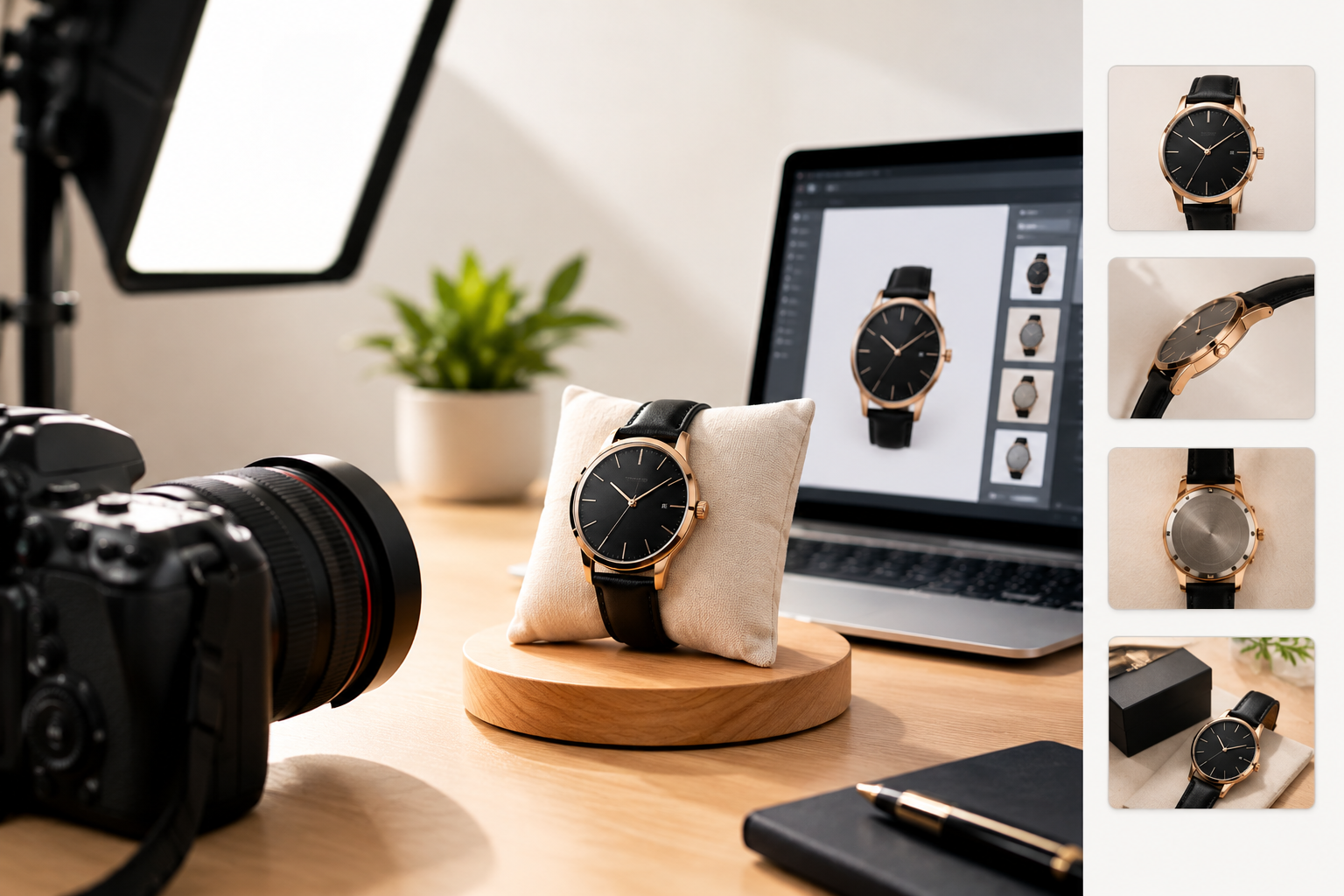

High-quality product images are one of the biggest drivers of conversion rates in online retail. Shoppers can’t touch, feel, or examine an item in person, so the photograph has to do all the persuading. With AI image generation tools becoming a practical part of many e-commerce workflows, knowing how to write effective, realistic product photography prompts has become a valuable skill for store owners, marketers, and content creators alike.
This guide breaks down how to structure prompts that generate clean, professional, and believable product visuals — along with ready-to-use examples across different product categories.
Why Prompt Structure Matters
AI image generators respond best to prompts that are specific, layered, and technically grounded. A vague request like “a nice photo of a shoe” will produce inconsistent results. Instead, effective prompts typically include:
- Subject description — the product itself, including material, color, and shape
- Lighting setup — soft box, natural light, studio lighting, etc.
- Background and setting — plain white, lifestyle scene, textured surface
- Camera and lens details — angle, depth of field, focal length
- Style references — commercial photography, editorial, minimalist
Combining these elements gives the AI enough context to produce an image that looks like it came from a real studio shoot rather than a generic render.
Core Prompt Formula
A reliable formula many creators use looks like this:
“[Product], [material/texture details], placed on [surface/background], lit with [lighting style], shot from [camera angle], [lens/depth of field detail], in the style of [photography style], high resolution, commercial product photography”
This structure works across nearly every product category, from cosmetics to electronics to apparel.
Prompt Examples by Category
Beauty and Skincare Products
- “A frosted glass skincare bottle with a wooden cap, resting on a marble surface, softly lit with diffused natural light from the left, shallow depth of field, minimalist studio background, high-end commercial photography style”
- “Matte black cosmetic jar with gold lettering, surrounded by scattered dried flowers, soft shadows, top-down angle, editorial beauty photography lighting”
Fashion and Apparel
- “Folded cotton sweater in sage green, photographed flat lay on a linen backdrop, natural window light, soft shadows, high detail fabric texture, e-commerce catalog style”
- “Leather ankle boots on a neutral concrete surface, three-quarter angle, studio lighting with subtle rim light highlighting the stitching, sharp focus”
Electronics and Gadgets
- “Wireless earbuds in a charging case, placed on a brushed aluminum surface, dramatic side lighting creating soft reflections, close-up macro shot, product highlight photography”
- “Matte black smartphone standing upright against a gradient gray background, studio softbox lighting, subtle reflection beneath the device, clean commercial tech photography”
Home and Kitchen Items
- “Ceramic coffee mug with steam rising, placed on a wooden table near a sunlit window, warm natural light, shallow depth of field, lifestyle product photography”
- “Stainless steel cookware set arranged on a marble countertop, bright even studio lighting, slightly elevated camera angle, glossy reflections, catalog-style composition”
Jewelry and Accessories
- “Gold pendant necklace displayed on a black velvet cushion, macro lens, dramatic spotlight from above, deep shadows for contrast, luxury jewelry photography style”
- “Silver hoop earrings floating against a soft pastel background, even diffused lighting, high detail close-up, minimal shadow, clean product photography”
Tips for Getting More Realistic Results
Specify lighting direction and quality. Terms like “soft diffused light,” “hard directional light,” or “golden hour lighting” give the model clearer cues than simply saying “good lighting.”
Mention surface materials. Backgrounds like marble, linen, brushed metal, or wood add texture and depth that make images feel tangible rather than artificial.
Include camera language. Phrases such as “shallow depth of field,” “85mm lens,” or “macro shot” help mimic the optical characteristics of real cameras, which improves realism significantly.
Avoid overcrowding the prompt. Long lists of unrelated adjectives can confuse the model. Focus on the five or six details that matter most for the shot.
Iterate in small steps. Generate a base image, then refine by adjusting one variable at a time — lighting, angle, or background — rather than rewriting the entire prompt.
Match the platform’s style expectations. Marketplaces like Amazon often require plain white backgrounds for main listing images, while Instagram or a brand’s own website may benefit from more lifestyle-oriented scenes.
Common Mistakes to Avoid
- Being too generic. “A watch on a table” leaves too much to interpretation and often results in unrealistic proportions or lighting.
- Ignoring shadow logic. Products with no shadow, or shadows that don’t match the light source, tend to look artificial. Explicitly requesting “soft natural shadow” helps.
- Overusing stylization keywords. Words like “hyper-realistic” or “8K” don’t always improve quality and can sometimes push the image toward an overly polished, uncanny look.
- Skipping composition details. Specifying whether the product should be centered, off-center, or shot from above changes the entire feel of the image.
Bringing It All Together
Writing effective product photography prompts is part art, part technical skill. The best results come from treating the prompt like a mini photography brief — covering subject, lighting, background, and camera perspective in a way a real photographer would think through before a shoot. With a consistent formula and a library of category-specific examples, e-commerce sellers can generate a steady stream of polished, on-brand product visuals without the overhead of a full studio setup.
As AI image tools continue to improve, prompt writing will likely become as fundamental to e-commerce visual merchandising as photo editing is today. Building a personal library of tested, high-performing prompts — organized by product type and platform — is one of the most efficient ways to stay ahead in a visually competitive market.


Leave a Reply