
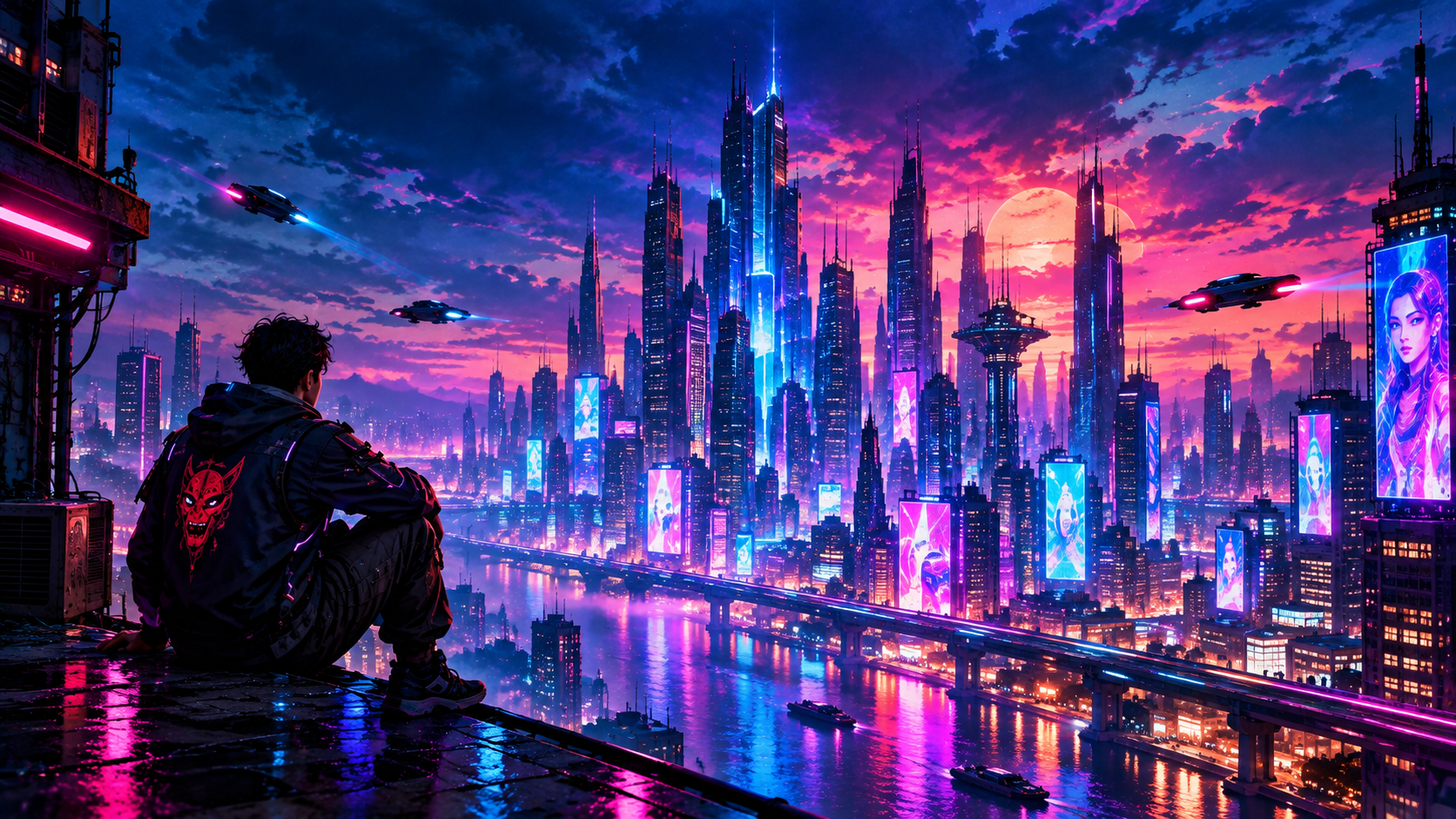

Cyberpunk cityscapes remain one of the most requested themes across AI art platforms like Midjourney, Stable Diffusion, and DALL-E. There’s something universally captivating about neon-drenched skylines, rain-soaked streets, and towering megastructures that blend dystopian grit with futuristic beauty. If you’ve struggled to get your prompts to produce that perfect cyberpunk atmosphere, this guide breaks down the elements, techniques, and ready-to-use prompt formulas that consistently deliver striking results.
Why Cyberpunk Prompts Are So Popular
Cyberpunk as a visual genre draws from decades of film, literature, and gaming influences — think Blade Runner’s fog-lit alleys, the neon chaos of Akira, and the sprawling megacities of countless video games. AI art generators are particularly good at rendering this style because cyberpunk imagery leans heavily on repeatable visual motifs: glowing signage, wet pavement reflections, dense vertical architecture, and moody lighting contrasts. These are exactly the kinds of patterns that diffusion models have been trained on extensively, which means even moderately detailed prompts can produce impressive results.
Core Elements Every Cyberpunk Prompt Needs
Before jumping into specific prompt examples, it helps to understand the building blocks that make a cyberpunk scene read as authentic rather than generic sci-fi.
Lighting and color palette. Cyberpunk art thrives on contrast — deep shadows punctuated by saturated neon. Pink, cyan, purple, and electric blue are the genre’s signature colors, often set against dark backgrounds. Mentioning “neon signage,” “volumetric lighting,” or “chromatic reflections” in your prompt nudges the generator toward this palette.
Architecture and scale. Cyberpunk cities are defined by verticality and density. Words like “towering skyscrapers,” “stacked megastructures,” “elevated highways,” and “labyrinthine alleyways” help establish the oppressive, layered urban feel that defines the genre.
Atmosphere and weather. Rain is almost a genre requirement at this point. Wet streets create reflections that double the visual impact of neon lighting. Fog, smog, and steam vents add depth and a sense of environmental decay.
Human and technological elements. Holographic advertisements, drones, flying vehicles, cybernetic enhancements, and crowded markets give a scene narrative texture. Including a human figure — even a silhouette — often makes a composition feel more alive and grounded.
Ready-to-Use Prompt Formulas
Here are several prompt structures you can adapt directly, organized by mood and focus.
1. Sweeping city skyline
“A vast cyberpunk metropolis at night, towering neon-lit skyscrapers, dense fog rolling between buildings, flying vehicles weaving through light trails, reflections on wet streets below, cinematic wide shot, hyper-detailed, volumetric lighting, blade runner aesthetic”
2. Street-level market scene
“A crowded night market in a cyberpunk alley, glowing holographic signs in multiple languages, steam rising from food stalls, puddles reflecting pink and cyan neon, characters in tech-wear jackets, gritty realistic textures, moody cinematic lighting”
3. Lone figure composition
“A lone figure standing on a rain-soaked rooftop overlooking a sprawling cyberpunk city, cybernetic arm glowing faintly, neon skyline stretching into the fog, dramatic backlighting, silhouette style, high contrast, digital painting”
4. Interior tech-noir scene
“Interior of a dimly lit cyberpunk apartment, holographic displays casting blue light across the room, city lights visible through rain-streaked windows, cluttered wires and tech gadgets, moody atmosphere, detailed concept art style”
5. Vehicle-focused scene
“A sleek flying car speeding through a narrow cyberpunk street canyon, neon reflections streaking across its metallic surface, towering buildings on either side covered in advertisements, motion blur, dynamic low-angle shot”
Tips for Refining Your Results
Add art style modifiers. Terms like “concept art,” “digital painting,” “octane render,” or naming a rendering style (photorealistic, anime-influenced, painterly) significantly shape the final output. Experiment to find what matches your vision.
Use camera and composition language. Phrases such as “wide-angle shot,” “low-angle perspective,” “aerial view,” or “close-up portrait” help control framing, which is often the difference between a flat image and a dynamic one.
Layer in specific details gradually. Rather than cramming everything into one long sentence, build prompts in logical clusters: subject, environment, lighting, mood, and style. This tends to produce more coherent compositions than a jumbled list of keywords.
Iterate with negative prompts. If you’re using a tool that supports negative prompting (like Stable Diffusion), excluding terms like “blurry,” “cartoonish,” or “oversaturated” can help sharpen realism when that’s the goal.
Reference established cyberpunk media sparingly. While it’s tempting to reference specific movies or games directly, many platforms restrict this due to intellectual property concerns. Instead, describe the visual qualities you admire — the lighting style, color grading, or architectural mood — rather than naming a copyrighted work outright.
Common Mistakes to Avoid
A frequent issue is overloading prompts with contradictory descriptors, such as combining “minimalist” with “hyper-detailed,” which confuses the model. Another common pitfall is neglecting lighting instructions entirely — without explicit lighting cues, generators often default to flat, evenly lit scenes that lack the genre’s signature drama. Finally, forgetting to specify aspect ratio or composition can result in oddly cropped or awkwardly balanced images, especially for wide cityscape shots.
Final Thoughts
Crafting compelling cyberpunk city prompts comes down to balancing atmosphere, architecture, and lighting while giving the AI generator clear, layered instructions. Start with one of the formulas above, then adjust individual elements — color palette, camera angle, or mood — until you land on a result that matches your creative vision. With a bit of experimentation, you’ll find that cyberpunk remains one of the most rewarding and visually rich genres to explore with AI art tools.
Leave a Reply