
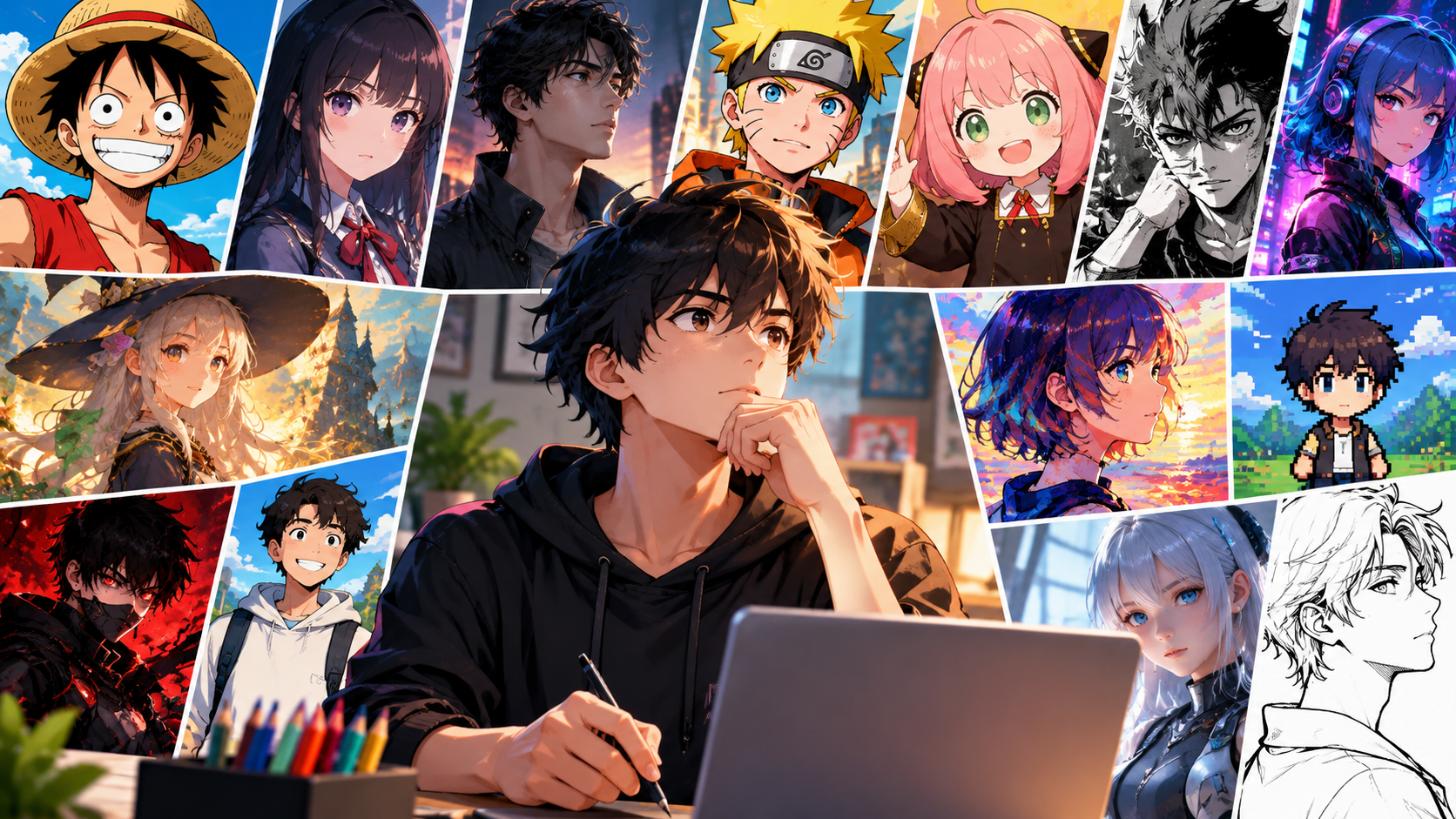

Anime art has exploded in popularity across AI image generators, and one of the biggest challenges creators face isn’t technical skill — it’s knowing exactly what to type. A well-crafted prompt can be the difference between a flat, generic anime figure and a character that looks like it stepped out of a professionally animated series. Whether you’re using Midjourney, Stable Diffusion, or another AI art tool, understanding different anime styles will help you communicate your vision more precisely and get results you’re genuinely happy with.
Below are 20 distinct anime character styles you can experiment with, along with tips on how to phrase your prompts for each one.
1. Classic 90s Shonen
Think bold outlines, exaggerated expressions, and dynamic action poses reminiscent of early Dragon Ball or Yu Yu Hakusho. Prompts should emphasize “thick linework,” “cel-shaded coloring,” and “dramatic motion lines.”
2. Modern Isekai
This style favors soft shading, pastel palettes, and clean digital rendering typical of current fantasy adventure series. Try phrases like “soft gradient shading” and “vibrant fantasy lighting.”
3. Studio Ghibli-Inspired
Warm, painterly backgrounds and gentle, expressive characters define this look. Use descriptors like “watercolor textures,” “soft natural lighting,” and “hand-painted background.”
4. Cyberpunk Anime
Neon-lit cityscapes, futuristic clothing, and high-contrast lighting give this style its edge. Include terms like “neon glow,” “chrome details,” and “rain-soaked streets.”
5. Chibi / Super Deformed
Oversized heads, tiny bodies, and simplified features create an adorable, comedic effect. Keywords like “big round eyes” and “compact proportions” work well here.
6. Dark Fantasy Gothic
Muted color schemes, intricate armor, and moody atmospheres suit this dramatic aesthetic. Try “desaturated palette,” “ornate armor details,” and “fog-covered setting.”
7. Magical Girl (Mahou Shoujo)
Sparkles, ribbons, and vibrant transformation sequences define this beloved genre. Prompt with “sparkling effects,” “pastel color scheme,” and “flowing ribbons.”
8. Slice-of-Life Realism
Softer proportions and everyday settings characterize this grounded, relatable style. Use “natural expressions” and “everyday clothing” for authenticity.
9. Mecha/Sci-Fi
Detailed machinery, metallic textures, and imposing scale define mecha-focused artwork. Include “mechanical joints,” “metallic sheen,” and “industrial background.”
10. Retro 80s Anime
Grainy textures, muted colors, and a nostalgic VHS-inspired look give this style its charm. Try “film grain texture” and “vintage color grading.”
11. Horror/Yandere Aesthetic
Sharp shadows, unsettling expressions, and high contrast lighting create tension. Use “dramatic shadows” and “unsettling eyes.”
12. Sports Anime Dynamic
Motion-focused compositions and sweat-detail realism capture athletic intensity. Try “dynamic action pose” and “motion blur effect.”
13. Fantasy RPG Adventurer
Elaborate costumes, weapons, and fantastical environments suit this adventurous style. Use “detailed fantasy armor” and “enchanted forest background.”
14. Idol/Pop Anime
Bright colors, stage lighting, and stylish outfits define this energetic aesthetic. Try “stage spotlight” and “glittery costume.”
15. Minimalist Line Art
Simple, clean lines with limited color create an elegant, modern look. Use “minimal linework” and “flat color palette.”
16. Watercolor Anime
Soft blending and translucent color layers give this style an artistic, dreamy quality. Try “translucent watercolor wash” and “soft edge blending.”
17. Post-Apocalyptic Anime
Weathered clothing, dusty environments, and muted tones capture survival themes. Use “tattered clothing” and “dust-covered ruins.”
18. Steampunk Anime
Brass gears, Victorian-inspired fashion, and intricate mechanical accessories define this niche style. Try “brass gear details” and “Victorian-inspired attire.”
19. Ethereal Fantasy Spirit
Glowing effects, flowing translucent fabrics, and otherworldly features suit spirit or deity characters. Use “glowing aura” and “translucent flowing fabric.”
20. Modern Webtoon Style
Bright, flat colors and simplified linework reflect the popular digital comic aesthetic. Try “flat vibrant colors” and “clean digital linework.”
Tips for Writing Better Anime Prompts
Regardless of which style you choose, a few general principles will improve your results significantly.
Be specific about lighting. Terms like “rim lighting,” “soft ambient glow,” or “harsh directional light” dramatically change the mood of a piece.
Describe the color palette. Instead of just naming a style, mention whether you want warm tones, cool tones, or high contrast.
Include pose and expression details. A character’s emotional state and body language carry as much visual weight as their design.
Reference composition. Words like “close-up portrait,” “full-body shot,” or “dynamic angle” help the AI understand framing.
Layer your descriptors thoughtfully. Combining two or three styles — such as cyberpunk with watercolor textures — can produce unexpectedly striking results.
Final Thoughts
Experimenting across these 20 anime styles is one of the best ways to discover your own creative voice, whether you’re generating characters for a personal project, a webcomic, or simply for fun. The key is treating your prompt like a creative brief: the more intentional you are about lighting, color, linework, and mood, the closer your output will match the vision in your head. Start with a style that resonates with you, tweak the details, and don’t be afraid to mix elements from different categories until you land on something uniquely yours.
Leave a Reply